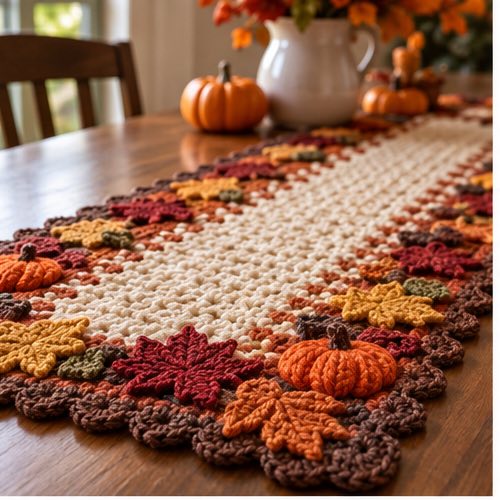
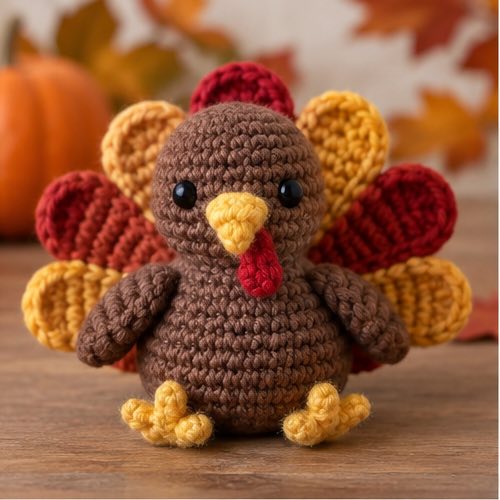
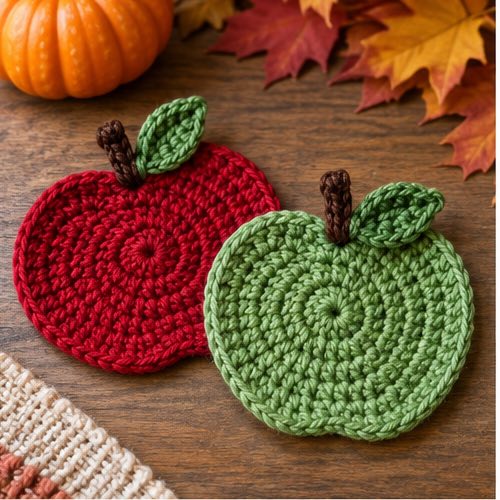
Fall crochet patterns are at their best when they bring warm color and useful texture into everyday spaces. This collection helps you choose projects that feel seasonal without being difficult to finish.
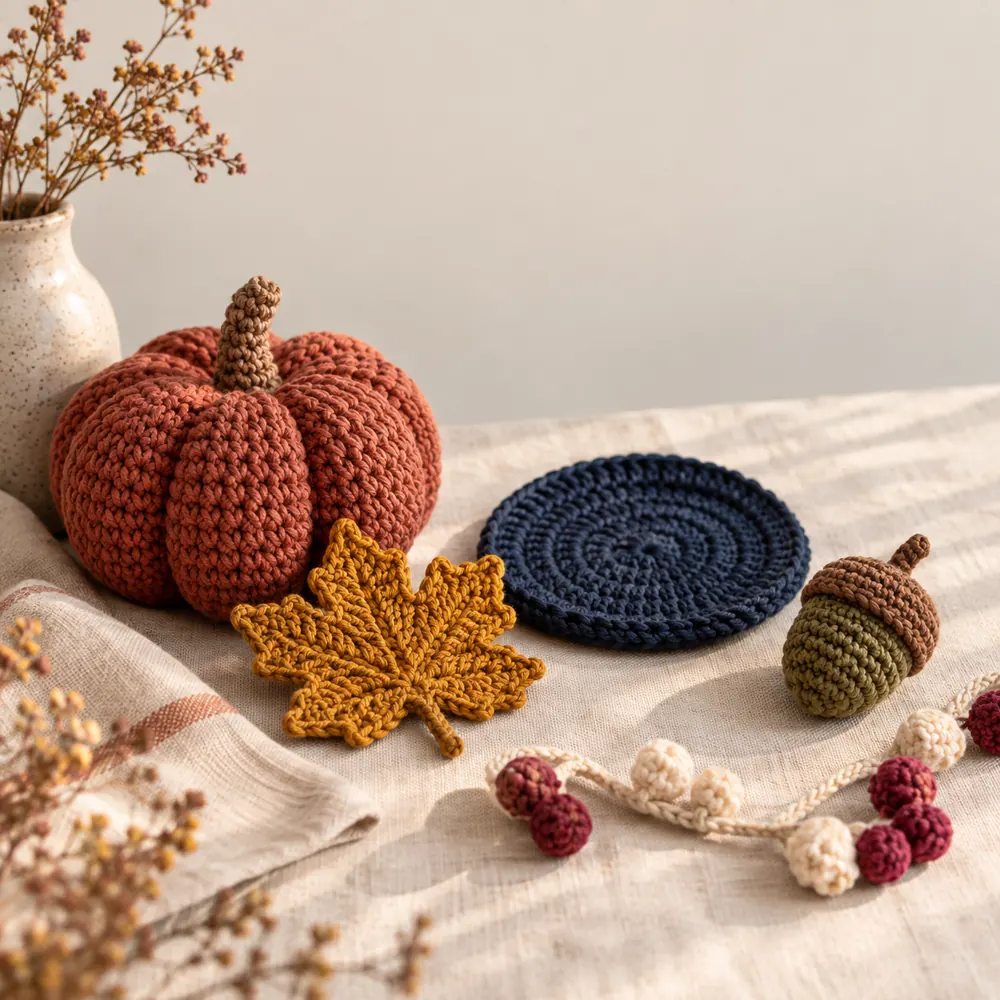
You can begin with a small accent, then move to larger décor as your confidence grows. Each idea uses familiar stitches and practical finishing details for autumn decorating.
You can also explore Fall Crochet.
Project at a Glance
| Skill level | Beginner-friendly |
|---|---|
| Crochet terms | US terms |
| Construction | step-by-step crochet construction |
| Yarn and hook | Use the weight and hook stated in the pattern directions |
| Main stitch | See the project instructions below |
| Gauge and finished size | Use the stated measurement checks before finishing |
| Finishing | Secure ends, reinforce seams, and add optional lining or reinforcement where useful |
Materials and Gauge
For a useful materials reference, visit Crochet by Season home.
Gather all yarn, hook, needle, scissors, and optional finishing supplies before you begin. Make a small gauge sample when the project needs a precise fit or a firm fabric. Measure after the sample has relaxed, then adjust hook size before committing to the full project.
Abbreviations and Notes
Ch = chain; sl st = slip stitch; sc = single crochet; hdc = half double crochet; dc = double crochet; inc = two stitches in one stitch; dec or sc2tog = decrease; st/sts = stitch/stitches. Unless a direction says otherwise, the turning chain does not count as a stitch. Keep a marker in the first stitch of each spiral round and write down completed rows.
Crochet the Main Project
Before continuing, you may also like crochet FAQs.
Fall crochet patterns are a wonderful way to bring warm color, soft texture, and handmade detail into your home when the weather starts to cool. This collection is designed for makers who want projects that feel seasonal without being difficult. You will find ideas for small decorations, useful home accents, and simple motifs that can be finished over a relaxed weekend. Whether you are new to crochet or returning after a break, autumn is an especially satisfying time to work with yarn.
What makes a crochet project feel like fall?
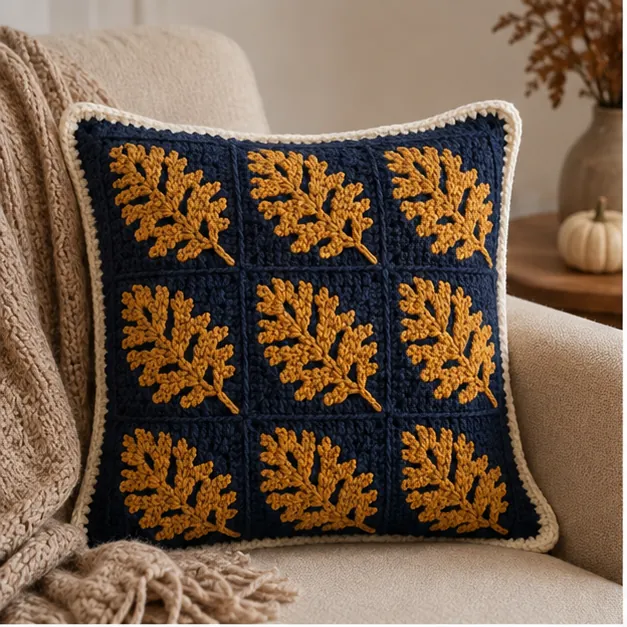
Autumn projects usually rely on a few familiar ideas: rich colors, natural shapes, and cozy textures. Rust, pumpkin orange, mustard, cream, deep green, and brown all work beautifully together. You can use those colors in a single project or make a small group of pieces that share the same palette. Leaf shapes, pumpkins, acorns, and simple stripes immediately suggest the season, while ribbing, bobbles, and textured stitches add warmth to pillows, baskets, and table decor.
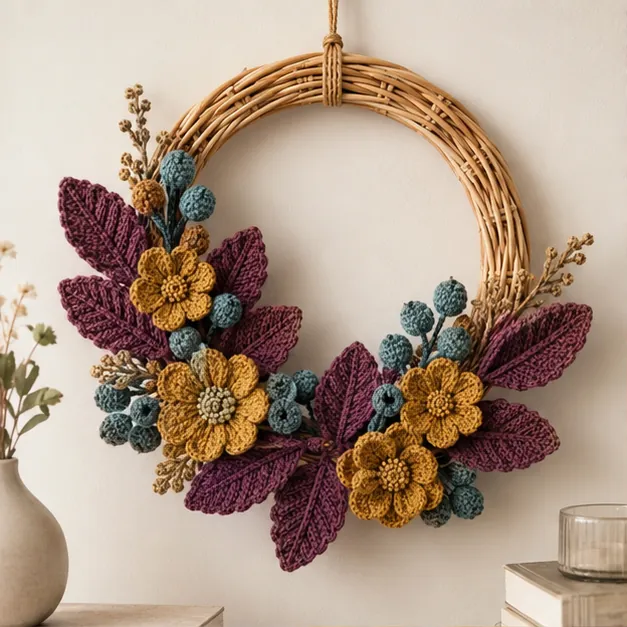
Start by choosing where you want to use the finished piece. A small table decoration might need to fit in a bowl or on a tray. A garland needs to be light enough to hang without stretching. A pillow cover needs a yarn that can handle everyday use. Making that decision first helps you choose yarn, hook size, and project scale with confidence.
Easy fall projects for beginners
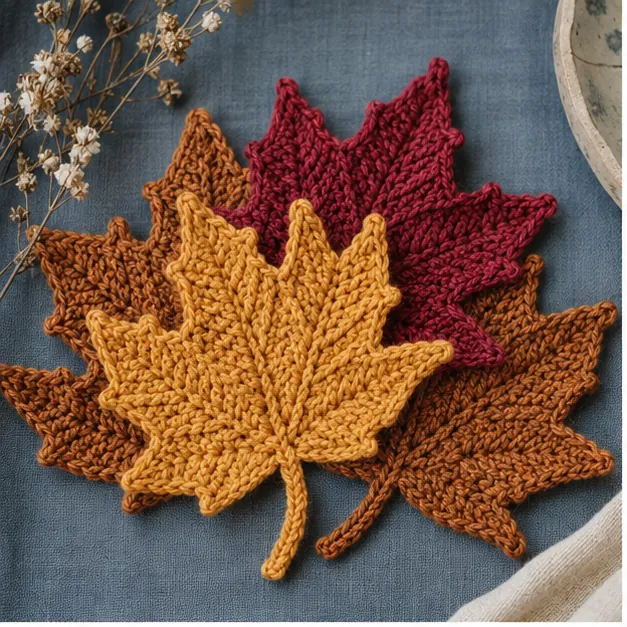
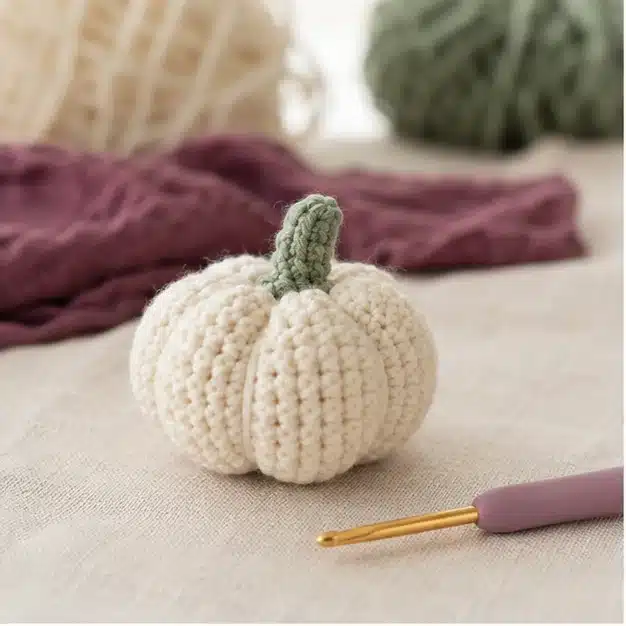
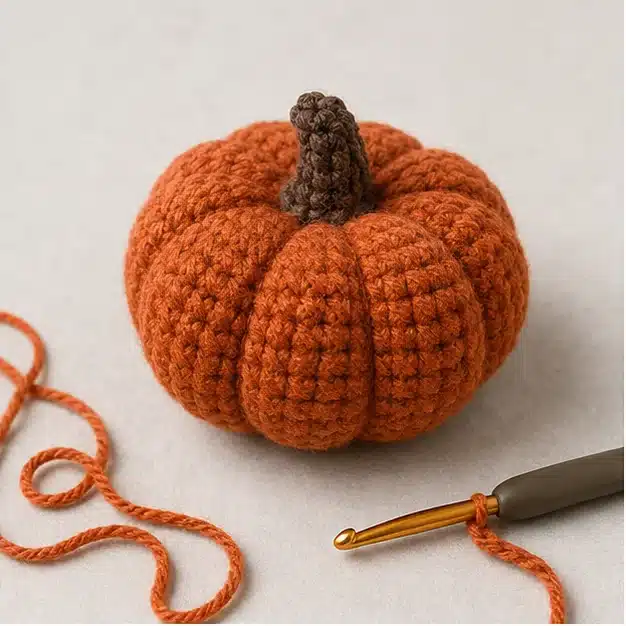
Small pumpkins are an excellent first fall project because they teach useful skills without requiring a large time commitment. A beginner can practice working in rows, seaming, gathering fabric, and shaping a stuffed piece. Mini pumpkins are even faster and make cheerful bowl fillers, place settings, or garland accents. If you prefer flat work, a maple leaf applique is a good next step. It can be sewn onto a pillow, stitched to a gift bag, or grouped into a simple table runner.
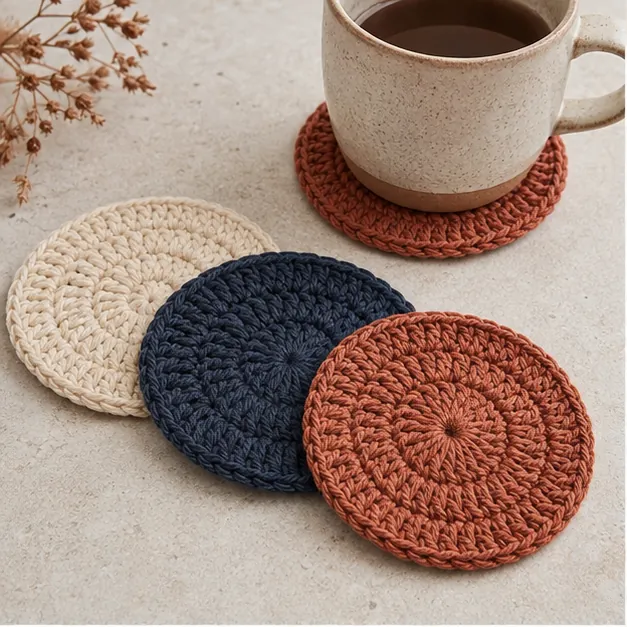
Round coasters are another beginner-friendly option. They give you practice with increases, which means adding stitches evenly so the circle stays flat. The key is to pause after each round and check the shape. If the edge begins to curl upward, the round needs more increases. If it ripples, it has too many. This simple habit makes crochet feel much less mysterious and gives you a useful finished set for autumn drinks.
Yarn and hook choices
For most fall decor, worsted-weight yarn is a practical place to begin. It works quickly, comes in many colors, and produces a sturdy fabric with a 4.5 mm to 5.5 mm hook. Cotton yarn is especially good for coasters and table pieces because it handles moisture better than many acrylics. Acrylic or acrylic-wool blends work nicely for pumpkins, garlands, and pillows because they are affordable, soft, and easy to find in seasonal shades.
Always check the yarn label, but do not feel locked into it. A slightly smaller hook creates a firmer fabric for stuffed pumpkins and amigurumi-style accents. A slightly larger hook creates more drape for a garland or pillow panel. Make a small swatch when size matters. For many decorations, gauge is not critical, but your finished size will change with yarn, hook, and tension.
How to organize a fall color palette
A balanced palette usually has one light neutral, one dark grounding color, and two or three warm accent colors. For example, cream can lighten a group of rust, gold, and forest-green projects. Brown can ground orange and mustard without making the finished display feel too bright. If you are unsure, place your yarn balls together in natural light before you start. The combination should feel pleasant before you invest time in a larger project.
You do not need to use every color in every project. Repeating one color across several pieces is enough to make a collection look intentional. A cream pumpkin, rust leaf, and brown acorn can sit together beautifully because the colors repeat in small ways. This is also a practical way to use leftovers from previous projects.
Beginner habits that make every project easier
Count your stitches at the end of every row or round, especially after an increase round. Each V-shaped loop along the top edge counts as one stitch; the loop on your hook does not. Use a locking stitch marker in the first stitch of a round so you can see where it begins. When working in rows, pay attention to the turning chain. If a pattern says the turning chain does not count as a stitch, do not work into it on the following row.
Weave in ends as you finish each color rather than saving them for the end. Blocking also makes a dramatic difference. To block a flat leaf or coaster, lightly dampen it, shape it on a towel, and allow it to dry. For acrylic yarn, use steam carefully without pressing the iron directly on the fabric. These small finishing steps give even a simple make a polished look.
Decorating with handmade fall crochet
Think in small groups instead of isolated items. Three pumpkins in different sizes look more collected than one large pumpkin. A short garland looks intentional when paired with a candle, framed print, or bowl of acorns. A set of coasters becomes a gift when tied with a ribbon and paired with a handwritten note. Handmade decor does not have to fill every surface; a few well-placed pieces can make a room feel warm and personal.
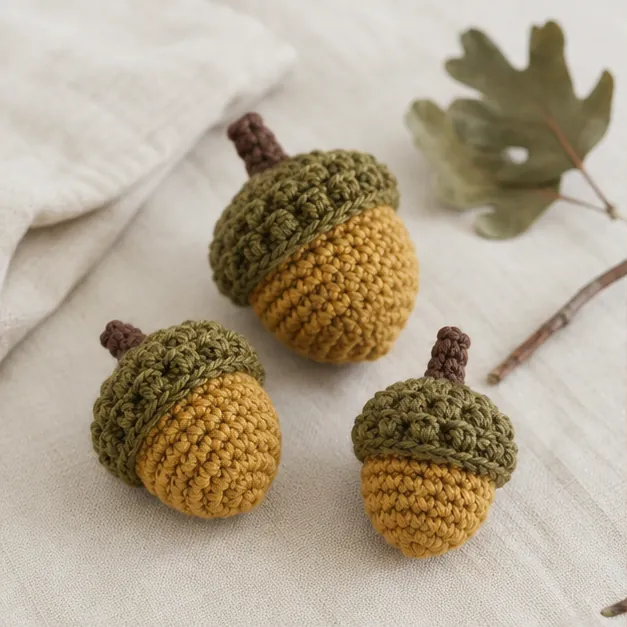
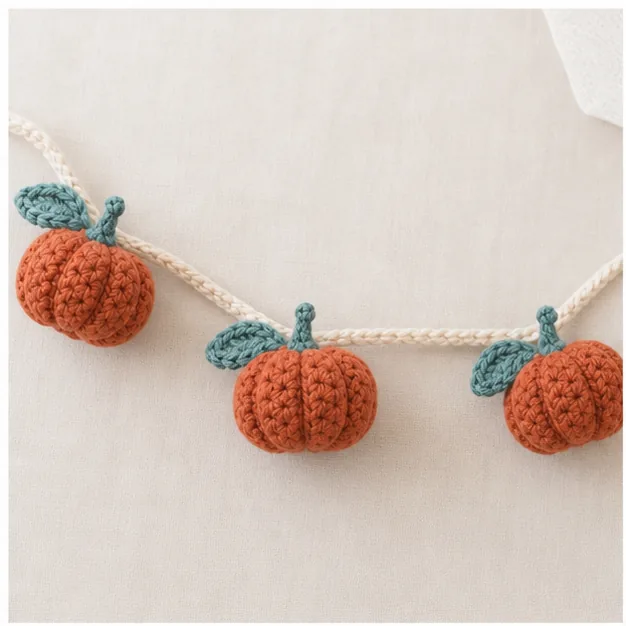
Save this hub as you choose your next autumn make. The projects in this Batch 1 fall collection are designed to build on simple skills, so you can begin with a quick accent and move toward a larger home project when you are ready.
Customize Your Project
For another seasonal idea, explore about Crochet by Season.
Change colors, edging, or small details only after you have completed one version at the stated gauge. If you substitute yarn, make a new sample because a thicker fiber can change the finished dimensions, drape, and amount of yarn needed. For bags and items that carry weight, add a lining or reinforcement before regular use.
Troubleshooting
The shape or edge is uneven
Stop and recount the previous round or row. Most uneven edges come from a missed increase, an added turning-chain stitch, or inconsistent tension. Correct the last clearly wrong section rather than trying to hide it later.
The finished piece does not match the measurement
Compare your gauge sample with the stated check. A smaller hook makes a firmer, smaller fabric; a larger hook makes a looser, larger one. Keep the stitch counts unchanged unless the pattern specifically gives resizing instructions.
A seam or attachment feels loose
Use matching yarn and short back-and-forth stitches through the crochet fabric. Reinforce high-stress points with a second pass, then weave the tail in securely.
Quick Project Plan
| Step | Action |
|---|---|
| 1 | Prepare yarn, hook, tools, and a gauge sample. |
| 2 | Follow the directions, count regularly, and check measurements. |
| 3 | Finish, reinforce, weave in ends, and review the project. |
Check Before You Finish
Test any hanging loop, strap, seam, or closure with a gentle pull. Lay flat items on a table to confirm they do not curl; lightly stuff three-dimensional pieces to an even shape. Adjust length, placement, or reinforcement before trimming the final yarn tail.
More Crochet Projects and Guides
Explore the related seasonal collections on Crochet by Season for your next project.
Final Thoughts
Start by checking the stitch count at every stage, then enjoy seeing this project take shape. Whether you keep the finished fall crochet patterns for your own home or make it as a gift, take a moment to check the size, seams, and woven-in ends before calling it complete. For more Fall Crochet inspiration and fresh project ideas, follow Crochet by Season on Pinterest and Facebook.